

Key Takeaways
- A selfie stick works well for travel, group selfies, walking videos, and quick handheld shots that need extra reach.
- An extendable tripod suits hands-free filming, fixed framing, full-body shots, and longer recording sessions.
- A 2-in-1 design can combine handheld reach with tripod support for different shooting styles.
- The right choice depends on how you usually shoot, carry, and position your camera.
Selfie sticks and extendable tripods can both move a camera farther from the person holding it, but they solve different shooting problems. A selfie stick keeps the camera in your hand and adds reach, while an extendable tripod can also support the camera without your hands.
That difference matters during travel, solo content creation, group photos, and longer recording sessions. Looking at how each tool works in real situations makes it easier to choose the right setup for your usual shooting habits.
Selfie Stick vs Extendable Tripod: What Is the Difference?
Both tools can change the distance between you and your camera, yet their main functions are different. The distinction becomes clearer when you look at reach, support, and how much control you need during a shot.
A selfie stick is a handheld extension tool. It lets you move your phone or camera farther away, which can create a wider frame or include more people and scenery. You still control the camera with your hand, so it works well for quick and mobile shooting.
An extendable tripod combines an adjustable pole with a support structure. Depending on the design, it can raise the camera and keep it standing on a surface. This makes it more useful for fixed compositions and hands-free filming.
The main differences include:
- Reach: Both can extend the camera, but a selfie stick focuses on handheld reach.
- Stability: A tripod can support the camera without your hand holding it.
- Portability: A compact selfie stick can be quick to carry and use, while tripod designs vary in size.
- Setup: A selfie stick usually needs little setup, while a tripod may require opening and positioning its legs.
- Hands-free shooting: An extendable tripod has a clear advantage when you need to step away from the camera.
- Camera positioning: A tripod offers more control over a fixed camera position.
Some compact designs combine both functions, so the line between a selfie stick and tripod can become less clear.
Where Does a Selfie Stick Work Best?

The main advantage of a selfie stick is freedom of movement. You can carry the camera with you, change the distance quickly, and adjust the framing without stopping to set up a support.
Group Selfies and Travel Photos
A selfie stick can make group photos easier because it moves the camera farther from the group. That extra distance can help fit more people into the frame while keeping some of the surrounding scenery visible.
It also works well for quick travel photos. You do not need to find a table, bench, or other stable surface. Take out the selfie stick, frame the shot, and keep moving. For travelers who take frequent quick photos, a selfie stick for travel can also reduce the amount of gear they need to carry.
Walking Vlogs and Moving Content
A selfie stick fits naturally into walking videos because the camera moves with you. You can film while sightseeing, walking through a city, visiting an event, or recording casual travel content.
It also gives you more control over framing as the scene changes. You can bring the camera closer, extend it farther, or shift its angle without stopping to reposition a tripod.
Creative Handheld Angles
A selfie stick can also help create angles that are harder to get with a camera held at arm's length. Raise the camera for a higher view, lower it for a different perspective, or move it slightly to the side for a wider composition. This flexibility can help with casual photography, outdoor clips, pet videos, and other situations where the camera needs to move with the subject.
Where a Selfie Stick Has Limits
Handheld shooting comes with trade-offs. Your hands can introduce small movements, especially during longer recordings. Holding a camera at arm's length for an extended period can also become tiring. A selfie stick is less convenient when you need a fixed frame and want to step away from the camera. For those situations, tripod support can make the setup easier to manage.
Where Does an Extendable Tripod Work Best?

An extendable tripod changes the focus from mobile shooting to controlled camera placement. It becomes useful when you want the camera to stay in position while you move around the scene.
Solo Content Creation
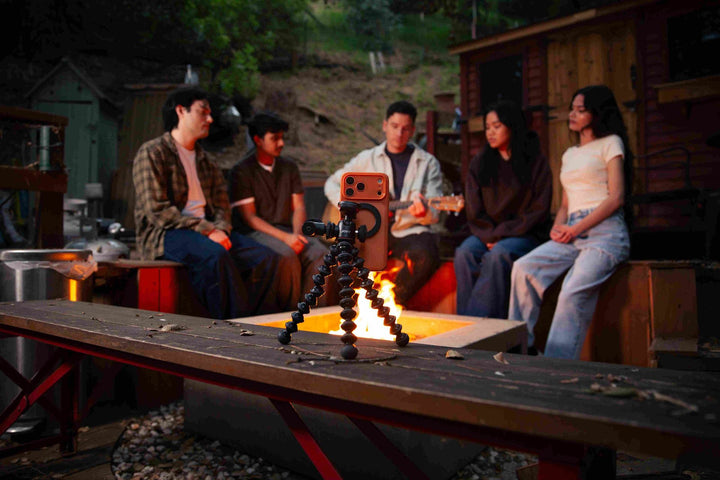
An extendable tripod can act as a practical tripod for solo filming. Set the camera at the desired height, frame the shot, and step into position without asking someone else to hold the camera.
This works well for tutorials, demonstrations, talking videos, cooking content, fitness clips, and other solo projects. A remote shutter can make the setup even easier because you can start recording without reaching back to the camera.
Full-Body and Fixed-Frame Shots
A tripod makes full-body framing easier because the camera can stay farther away while you stand or move in front of it. You can also adjust the height and angle until the frame looks right. This can be useful for workout videos, dance practice, outfit videos, demonstrations, and other content that needs more room around the subject.
Longer Recording Sessions
Holding a camera for several minutes can become uncomfortable. A tripod removes that problem by supporting the camera throughout the recording. It can also help keep the composition consistent. Desk videos, livestreams, tutorials, and product demonstrations can benefit from a stable camera position that does not shift with your hands.
When Stability Matters More Than Mobility
An extendable tripod makes more sense when the camera needs to stay in a set position. A tabletop tripod, for example, can provide a compact setup for desk videos, calls, demonstrations, and other stationary content.
The actual stability still depends on the tripod's design. The weight of the camera, length of the extended pole, base size, and shooting environment can all affect how steady the setup feels.
Selfie Stick vs Extendable Tripod: Side-by-Side Comparison
The choice becomes simpler when the two tools are compared by the tasks they handle most naturally. This quick table highlights the practical differences without treating either option as a universal solution.
| Feature | Selfie Stick | Extendable Tripod |
| Primary purpose | Reach and mobility | Stability and positioning |
| Handheld shooting | Strong fit | Good, depending on design |
| Hands-free shooting | Limited | Strong fit |
| Group selfies | Strong fit | Good fit |
| Walking content | Strong fit | Less convenient |
| Fixed framing | Limited | Strong fit |
| Full-body shots | Possible | Strong fit |
| Long recording | Less convenient | More convenient |
| Travel portability | Usually strong | Depends on design |
| Setup speed | Very quick | Requires setup |
The biggest difference in a selfie stick vs tripod comparison is not simply size or height. It is how you plan to use the camera. If the camera needs to move with you, handheld reach matters more. If you need the camera to stay put, tripod support becomes more useful.
What If You Want Both?
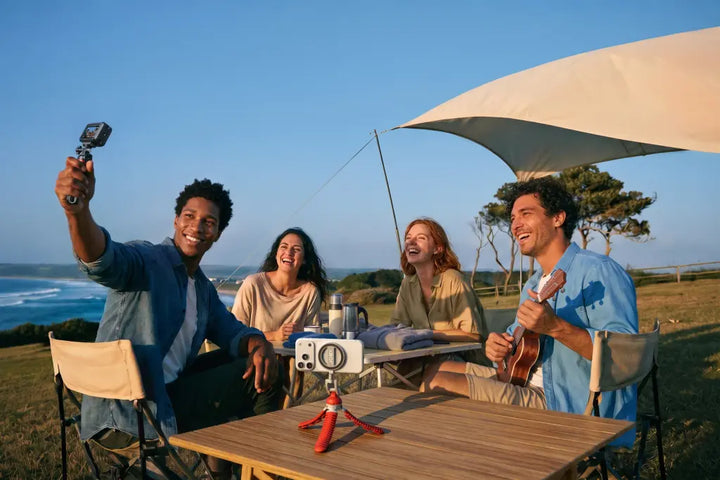
Some compact designs combine handheld reach and tripod support, giving creators more flexibility without requiring separate gear for every shooting situation. This can be useful for people who switch between travel photos, handheld videos, and stationary content.
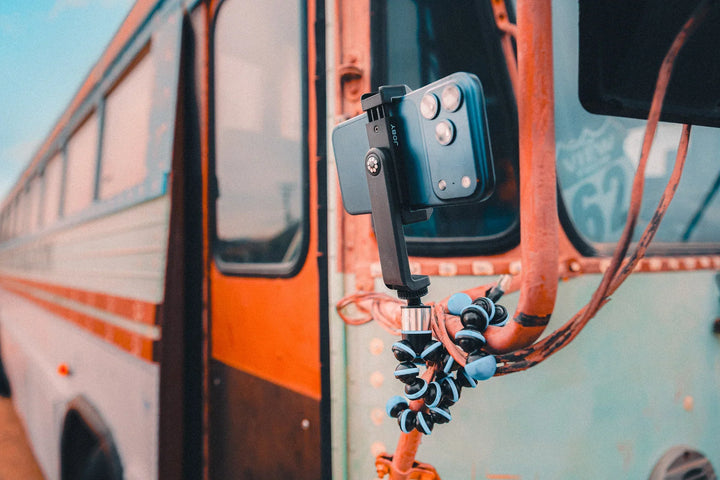
A fold-out tripod can turn an extended handheld device into a freestanding setup. A compact tabletop tripod for phone shooting can also handle desk content, while a model with a standard camera mount can work as a tabletop tripod for camera setups.
The trade-off is that a compact hybrid usually focuses on portability and versatility rather than replacing every type of dedicated tripod. For example, the JOBY HandyPod Clip Extend Tripod for Cameras combines selfie-stick, tabletop-tripod, and ledge-mount modes in a 106 g design, with a standard 1/4-inch thread and an extendable pole.
This type of design can also appeal to people looking for a pocket tripod that can handle more than a simple tabletop setup.
How to Choose Between a Selfie Stick and an Extendable Tripod
Instead of focusing only on specifications, start with the situations you shoot most often. Your usual camera position, recording style, and travel habits can point you toward the right format.
Choose a Selfie Stick If You:
- Shoot mainly while moving.
- Travel frequently.
- Take group selfies and quick photos.
- Want a fast setup with little adjustment.
- Prefer to keep the camera in your hand.
- Need extra reach without carrying a larger support.
Choose an Extendable Tripod If You:
- Often film yourself alone.
- Need hands-free filming.
- Record from a fixed position.
- Need full-body framing.
- Record for longer periods.
- Want more control over camera height and composition.
Consider a 2-in-1 If You:
- Switch between handheld and stationary shooting.
- Want to carry less gear.
- Need both reach and basic tripod support.
- Shoot in different locations throughout the day.
- Want a compact setup that can serve as both a handheld tool and a tripod.
Match Your Gear to the Way You Shoot
The choice between a selfie stick and an extendable tripod comes down to how you use your camera. A selfie stick fits mobile shooting, quick setup, travel, group photos, and changing angles. An extendable tripod suits hands-free filming, fixed framing, full-body shots, and longer recordings.
If your shooting habits include both styles, a compact 2-in-1 design can provide a useful middle ground. Instead of looking for the most feature-heavy option, focus on the camera positions and shooting situations you use most.
FAQs
Q1: Is a Selfie Stick Better Than an Extendable Tripod for Travel?
A selfie stick can be more convenient for travelers who take quick photos and moving videos. An extendable tripod can be more useful for hands-free group photos, full-body shots, and stationary content. Your travel style should guide the choice.
Q2: Can an Extendable Tripod Be Used as a Selfie Stick?
Some extendable tripods include a handheld mode that lets you use the extended pole like a selfie stick. Other tripod designs are made mainly for freestanding use, so check the product's modes and construction.
Q3: Is a Selfie Stick Stable Enough for Video?
A selfie stick can work well for handheld video, but your hands still control the camera's movement. A freestanding tripod provides more consistent support for fixed shots, especially during longer recordings.
Q4: What Is the Best Option for Solo Content Creation?
An extendable tripod is generally more convenient for solo content that requires a fixed camera position and hands-free filming. A hybrid model can make sense if you also want to switch quickly to handheld shooting.